
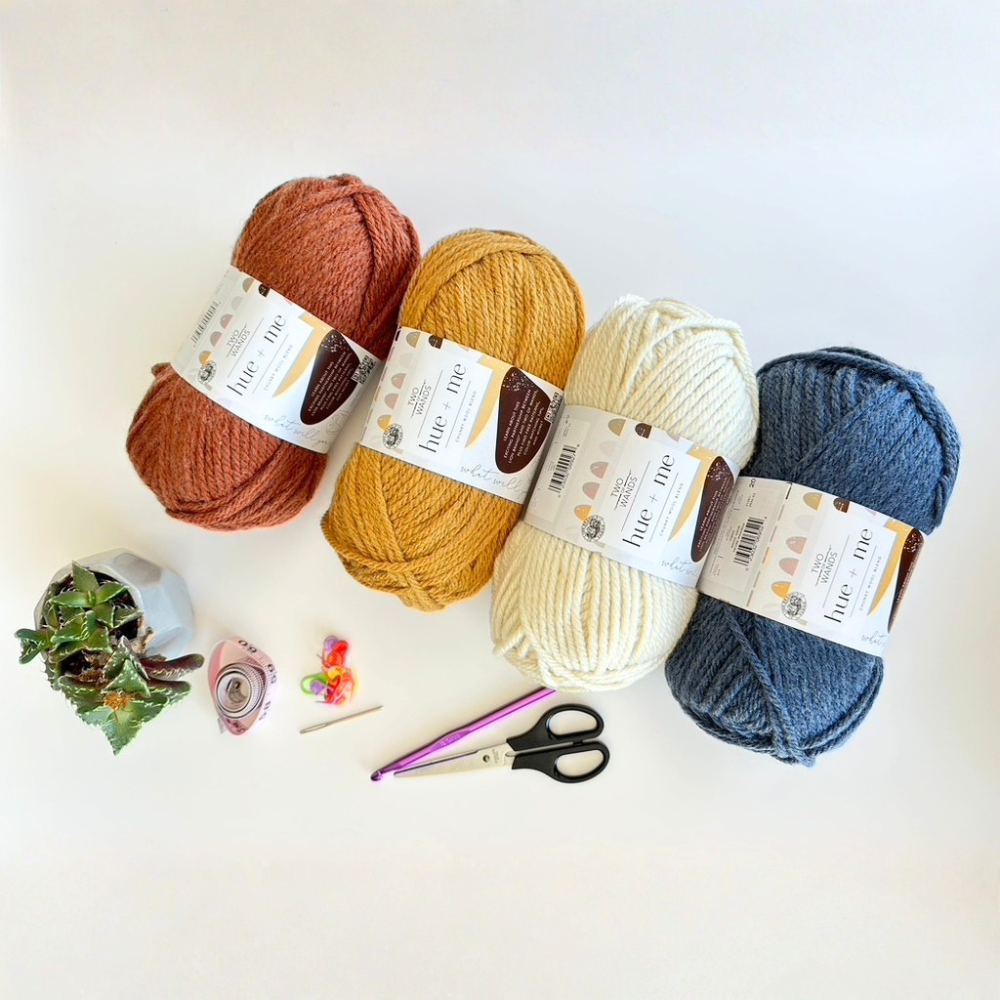
You found the perfect crochet sweater or cardigan pattern, and now comes one of the most important decisions: choosing the right yarn for crochet garments. The yarn you choose can completely change how your finished sweater looks, feels, drapes, and fits.
With so many different yarn weights, fibers, textures, and colors available, choosing yarn can sometimes feel more complicated than choosing the actual pattern!
The right yarn can give your sweater beautiful drape, softness, and movement. Meanwhile, the wrong yarn can leave the same design feeling stiff, heavy, or completely different from what you expected.
1. Start With the Yarn Weight
The first thing I look at when choosing yarn for crochet garments is the yarn weight recommended in the pattern.
Yarn weights range from very fine yarns to super bulky yarns. For garments, you’ll commonly see DK, worsted, and bulky yarns.
If a crochet pattern calls for #4 worsted weight yarn, you’ll generally want to start your search with another #4 yarn.

However, yarn weight is only the beginning.
Not every yarn within the same weight category is exactly the same thickness. One #4 worsted weight yarn can feel noticeably thinner or thicker than another.
That’s why you should never choose a substitute based only on the number printed on the yarn label.
My Emilie Cardigan and Wrenley Oversized Cardi both use #4 weight yarn, but they have a completely different finish, texture, and drape. It’s a great example of how two yarns in the same weight category can create very different results!
2. Consider the Fiber Content

Fiber content is just as important as yarn weight when choosing yarn for a sweater or cardigan.
Different fibers create very different fabrics.
For example, wool can provide warmth, elasticity, and beautiful stitch definition. Acrylic is often affordable, easy to care for, and available in tons of colors. Cotton can create beautiful stitch definition but may feel heavier and have less elasticity.
Blended yarns can give you a little bit of everything.
Before choosing your yarn, think about how you want to wear the finished garment. Is it a cozy winter cardigan, a lightweight layering vest, or an oversized everyday sweater?
The answer can help you narrow down the best fiber for your project.
3. Think About Drape

Drape describes how your crochet fabric hangs and moves, and it’s especially important when choosing yarn for crochet garments.
A yarn can technically match the recommended weight and gauge but still create a completely different-looking sweater if the fabric is too stiff.
Both my Emilie Oversized Cardigan and Wrenley Oversized Cardi are made with #4 weight yarn. However, they each have a very different drape, texture, and overall look.
This is a great example of why testing the yarn you plan to use is so important. Even yarns within the same weight category can create completely different results.
Before committing to several skeins, crochet a swatch and actually hold it up.
Does it fall naturally? Does it feel stiff? Is it heavier than you expected?
Your swatch can tell you much more than the yarn label ever will.
4. Substituting Yarn for Crochet Garments

You find the perfect pattern, but you can’t find the recommended yarn. Or maybe you already have a beautiful yarn in your stash that you’d love to use instead.
No problem!
Yarn substitution is completely possible. However, you want to compare more than just yarn weight.
When substituting yarn, compare the yarn weight, fiber content, yardage, gauge, texture, drape, and care instructions.
If two yarns are both labeled #4 but one has significantly more yardage for the same weight, one may be noticeably thinner than the other.
Most importantly, swatch before substituting yarn and check out my blog on How to Check Gauge for a Crochet Sweater!
5. Always Check Your Gauge

When choosing yarn for crochet garments, always check your gauge, especially when substituting yarn.
Gauge tells you how many stitches and rows fit within a specific measurement, usually 4″ x 4″.
Your yarn, crochet hook, stitch pattern, and individual tension can all affect your gauge.
For the most accurate measurement, I recommend making your gauge swatch at least 6″ x 6″. This gives you plenty of room to measure from the center without the edges affecting your results.
Remember, matching gauge is more important than matching the exact hook size listed in the pattern.
Check out my blog on gauge here.
6. Pay Attention to the Stitch Pattern

The same yarn can look completely different depending on the crochet stitch.
Some yarns show off textured stitches beautifully. Others may hide the stitch definition.
A highly variegated yarn can look amazing with a simple crochet stitch because the yarn itself becomes the focus. However, a solid or lightly heathered yarn may show off a detailed textured stitch much better.
This is another reason making a swatch is so helpful.
You’re not only checking gauge. You’re also seeing how the yarn and stitch work together.
I used T-shirt yarn for both my Brooklyn Bag and Chloe Bag, and I love the beautiful sheen it gives the finished bags. It also creates a sturdy, structured fabric that works perfectly for crochet bags.
7. Think About the Finished Weight
A single skein of yarn may not feel heavy, but a crochet cardigan can require several skeins.
Once all that yarn is crocheted together, the finished garment can become surprisingly heavy.
This is particularly important with oversized or longer crochet cardigans. A heavy yarn can pull the garment downward, changing its length and fit over time.
When comparing yarn for crochet garments, think about the overall weight of the finished project, not just the thickness of the yarn.
8. Consider How the Yarn Will Be Washed

You’re putting a lot of time into crocheting your garment, so you want to be able to wear it again and again.
Before buying your yarn, check the care instructions.
Is it machine washable? Does it need to be hand washed? Can it go in the dryer? Will it need to be reshaped and laid flat?
There isn’t necessarily a right or wrong answer. It depends on what works for you and how you plan to use the garment.
However, it’s definitely something you want to know before you crochet an entire sweater.
9. Don’t Forget About Color

Okay, this might be the fun part!
Color can completely change the personality of a crochet garment.
A neutral shade can make a textured stitch feel classic and easy to wear. Meanwhile, a bright color can turn the same crochet sweater into a statement piece.
Variegated, tweed, heathered, and self-striping yarns can add even more interest.
Just remember to consider your stitch pattern too. A very busy yarn can sometimes hide beautiful stitch details.
I loved playing with color when creating my Amelia Tote! The different shades really bring the long wave crochet stitch to life and give the bag that fun, ocean-inspired feel I was looking for.
10. Buy Enough Yarn From the Same Dye Lot
Once you find the right yarn, make sure you have enough to complete your garment.
Whenever possible, buy your yarn at the same time and check the dye lot numbers.
Even yarns with the exact same color name can have slight differences between dye lots. Those differences may become much more noticeable once they’re crocheted into a large sweater or cardigan.
It’s always better to have a little yarn left over than to get almost to the end of your project and realize you need one more skein!
Choosing the Best Yarn for Crochet Garments

There isn’t one perfect yarn for every crochet garment.
For a cozy oversized cardigan, you may want softness, warmth, and beautiful drape. For a fitted sweater, elasticity and the ability to hold its shape may be more important.
Instead of choosing yarn based only on the weight listed on the label, think about the finished piece first.
Ask yourself: How do I want this garment to feel when I wear it?
Then make a swatch.
A gauge swatch lets you see the color worked up, feel the finished fabric, check the drape, practice the stitch, and see how the yarn responds to washing or blocking.
Choosing the right yarn for crochet garments becomes much easier once you know what to look for. Compare the yarn weight, fiber, thickness, yardage, drape, gauge, stitch definition, care instructions, and overall feel of the fabric.
Most importantly, make that gauge swatch! You can also check out my 10 Common Crochet Mistakes and How to Fix Them blog for more helpful tips to avoid common mistakes and make your crochet projects successful from the start.
After all, you’re going to spend hours making your crochet garment. Taking a little extra time to choose the right yarn at the beginning can make all the difference when you finally get to put it on!